Car Seats
As We Grow
As parents we can’t wait for our kids to reach their milestones, but it’s bittersweet. Your baby is growing up… and will soon be out of his infant car seat.
“Do I have to forward face?” Rear facing is the safest position for your baby to be in, so there’s no rush to forward face. Infant/child car seats are designed to allow your baby to rear face longer, even though they have outgrown their infant car seat.
Babies grow like weeds (quicker than we’d like), so you need a car seat that can keep up.
An infant/child car seat (Stage 1 and 2) can be converted to either rear or forward facing. They’re designed to be used from the infant stage to the toddler years. Don’t feel like you have to rush to forward facing. It’s best to keep him in a rear-facing seat for as long as he meets the height and weight requirements.
“I’m looking for a car seat with more flexibility.” An infant/child/booster seat (Stage 1, 2 and 3) is an all-in-one car seat that will take you through all stages of use… from rear facing to forward facing and belt-positioning booster. For the safest ride, keep your child in the earliest stage until he has outgrown it.
Once your child has outgrown his infant car seat and surpassed the maximum rear-facing weight requirements (depending on the model), you can graduate to a Child/Booster Seat (Stage 2 and 3). Starts out as a forward-facing seat, then converts to a booster. There’s no hurry to move your child to a booster. It’s safer to use a 5-point harness for as long as possible.
Booster seats (Stage 3) can be used for children at least 40 lbs. You can use you car’s seatbelt to secure your child. They are designed to raise his body up to ensure proper positioning of the vehicle’s shoulder and lap seatbelts.
Shop Car Seats
FAQ - Your Car Seat Questions Answered
You and your baby will go on a lot of adventures together, many of which will be on four wheels. If you’re just getting the hang of how to use a car seat, we’ve got some answers to the most common car seat questions—and a few extra tips to boot.
Q: Why can't I put my baby's car seat in the front of the car?
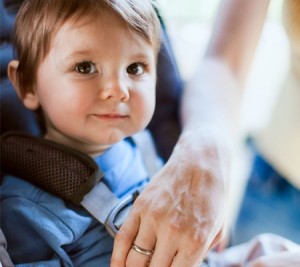
A: Because car seats and airbags don’t mix. The passenger-side airbag is designed to help protect adults riding in this seat, but if one is released (even in a low-impact crash), the force of the airbag opening can cause serious head and neck injuries to your little one. The safest place for a baby or young child is in the back seat.
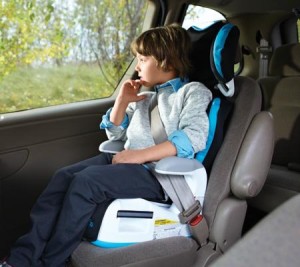
Q: How do I know the seat has been properly secured?
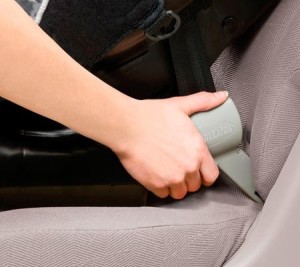
A: If the seat can slide, it’s not ready to ride. Your child’s car seat shouldn’t be able to slide more than 2 cm in any direction. If your car is newer than 2002, it should be equipped with the Universal Anchorage System (UAS). Using these anchors may be easier to install the car seat than using a seat belt to secure it.
Never leave your child alone in or near a car.

Even if you’re only running into the store for a second, always keep your little one with you (it’s more fun to show them off anyway).
Bonus tip #1: beware of items in the back seat.
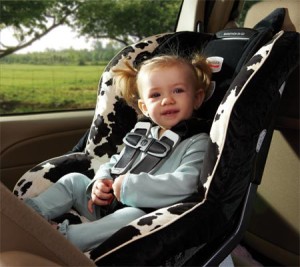
If you haven’t learned yet, infants have a tendency to put anything and everything in their mouth. Plus any loose items in the backseat can become projectiles during even the slightest fender bender.
Bonus tip #2: set a good example and always wear your seat belt.
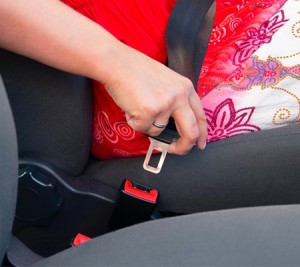
Baby see baby do. If you go for a ride unbuckled, they’ll eventually think they can, too. Let them know from an early age that it’s non-negotiable.
Adult Seat Belt Readiness and the 5-Step Test:
Once a child is at least 145 cm (4' 9") tall they may be big enough to safely fit the adult seat belt. How will you know? Try the 5-Step Test. Before you make the move to seat belt alone, check your provincial government's requirements.
5-Step Test: If you answer yes to all of the below your child can safely ride in an adult seat belt.
1. Can they sit all the way back in the vehicle seat?
2. Do the knees bend comfortably at the edge of the seat?
3. Does the shoulder belt sit across the chest and collarbone?
4. Does the lap belt sit across the upper thighs/hips?
5. Can they sit that way for the entire ride?
Shop Car Seats
The First Ride Home
It’s finally happening: you’re ready to go home. You’ve dressed your little love in his adorable going-home outfit and placed the tiniest hat you’ve ever seen on his perfect head.
“Oh wow,” you think, as you lay him carefully in his infant car seat; “He looks so small… Will he be safe?... Are the straps tight enough?... Are they too tight?”
Everyone tells you he’s “snug as a bug” and you’re just having new mommy and daddy jitters. But as they shower you with congratulations and push you through the hospital exit, you’re both thinking the same things:
“Are these people serious? How can they let us walk away with a tiny human? We forget to feed our plants! We’re always losing our keys! What if we can’t do this?”
We’ve all been there. We can help, step by step… stage by stage.
Starting with that first car seat: an infant car seat. It seems so big compared to your newborn. So daunting. There’s a 5-point harness, different buckle positions and a host of other features depending on the model you choose. Take a breath. Every infant car seat available at Babies R Us meets all federal and provincial safety regulations and infant car seats are specifically designed for the tiniest of travellers, 4 to 35 lbs (always confirm with manufacturer’s info).
“I’m worried about my baby’s head; he’s so small…” Babies have weak neck muscles, which is why infant car seats have supports in place to cradle your little one’s head and are rear-facing (Stage 1) to help the seat absorb the force of impact in case of collision (not that we like to think about that). But the good news is that rear-facing is the safest position for your baby to be in.
Shop Car Seats
What You Need to Know About Infant Car Seats
Where do you think you’re going, mommy?
When you first head home with your newborn, if you don’t have an infant car seat to put them in, the hospital won’t let you leave. Transport Canada recommends that all infants and toddlers ride in a rear-facing child safety seat until they exceed the maximum height or weight allowed by the seat’s manufacturer*.
Although there are all kinds of brands and features to choose from, the best and safest infant car seats share the same key elements: they’re designed to support the back, head and neck of a developing infant.
Remember, they must be installed rear-facing (toward the back window) in the back seat of the vehicle.
*Weights and heights vary by model. Please refer to individual car seat instruction manual for manufacturer recommendation.
Shop Car Seats
Booster Seats
Before you know it, your child will be getting too big for his forward-facing car seat. But before you shed too many tears about how your little one’s all grown up—hold that thought: they are not big enough for the car’s seat belt system alone. It’s time to bring in the booster.
You have options.
When choosing a booster seat, you have two choices:
- Backless / No-back booster seat
- High-back booster seat
You might already have a booster seat if you opted for a child/booster car seat or 3-in-1 in an earlier stage.
High-back booster seat (40-120 lbs.)*
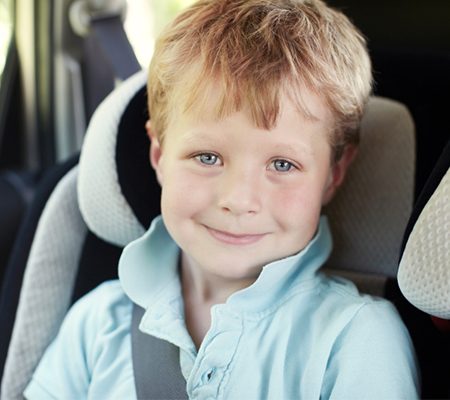
This option raises the child up and features additional protection to the child’s head and body by incorporating head wings and side wings, while using your vehicle’s own seat belt system. It’s a safe and sturdy option but you must always remember the Both Belts Rule. All booster seats must be used with shoulder belts—never with lap belt alone.
Backless / no-back booster seat (40-120 lbs.)*
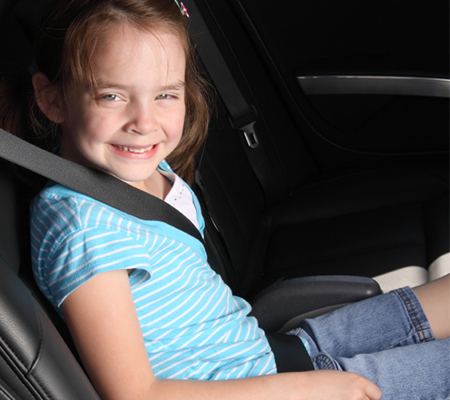
This booster seat uses the car's own seat belt system to keep your child safely secured but doesn't have a back, shoulder belt guide, or head wings. This option may be a good choice for older, more practiced booster riders who safely fit the shoulder belt without the help of a high back. If you opt for this type of booster seat, remember that your vehicle must have a head restraint to ensure there is neck protection in the event of a crash.
*Weights and heights vary by model. Please refer to individual car seat instruction manual for manufacturer recommendation.
Shop Car Seats
Car Seat Features And Options
You know nothing is more important than keeping your baby safe. That’s our priority, too. That's why every car seat you'll find at Babies “R” Us meets all of Transport Canada’s strict safety standards. There’s more to picking the best car seat than a stylin’ design and a nod from the government, though. Here are some features to consider when comparing car seats.
Side impact protection
Car seats were originally designed with a focus on head-on or rear collision—which is great until someone runs a red light and hits your door. Now manufacturers have turned their attention to improving the car seat’s ability to shield a baby’s body and head in a side-impact collision. Energy-absorbing foam is frequently used to “build in” the protection.
Head & body support cushions
Newborns have heavy heads and weak necks, so when placed in a car seat at the correct 45-degree angle, they tend to droop over like a wilted daisy. Support cushions will keep them much more comfortable, and also aid in proper positioning.
Upfront harness adjust
Car seat straps need to fit just right, and that means frequent adjustments as your baby grows. This feature allows for easy, frontal adjustment of the harness system (no need to reach behind your baby or rethread the straps). The best versions have a knob or slide that allows you to move the harness up or down continuously, rather than into pre-set positions.
Multiple recline adjustments
Some seats have just one recline setting, but since all back seats are not identical, that setting may not be right for your car. Multiple recline settings will allow you to get your rear-facing safety seat at the correct angle, and help make a forward-facing child more comfortable.
Level indicators
Your rear-facing car seat needs to be upright enough to provide solid back and neck protection, but reclined enough to prevent your baby’s head from falling forward while they sleep. The instruction manual will tell you the correct angle (usually 45 degrees), but how do you know if you’ve got it right? Some car seats have a level indicator to help figure it out for you.
Height-adjustable Base
An adjustable base (for a rear-facing seat) makes it easier to seat the base solidly and position the car seat correctly. All infant car seats are equipped with a height-adjustable base.
Washable fabric
Babies are messy. They just are. Your car seat will get something gross on it eventually. Some car seats have covers that strip right off and go in the washer. Some covers cannot be removed so look for fabric that will stand up to vigorous hand scrubbing.